

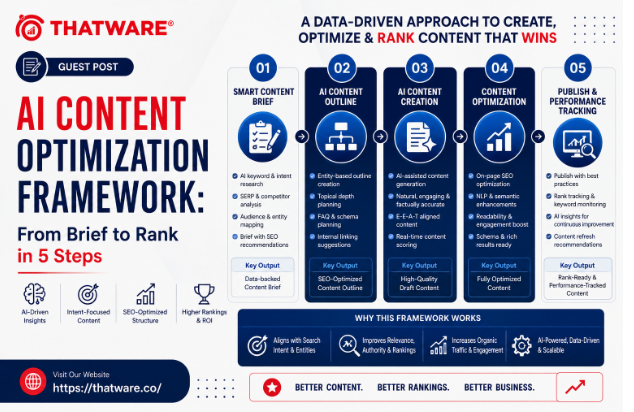
Content production is often the largest single investment in an SEO program — and the one with the most variable outcomes. Two articles targeting the same keyword, published on domains with comparable authority, can produce dramatically different ranking results based purely on the quality of the content strategy behind them. The difference isn’t usually writing quality in the traditional sense. It’s strategic quality: how well the content addresses actual search intent, how completely it covers the topic’s semantic territory, and how clearly it establishes the entity relationships that search engines use to evaluate topical authority.
A structured AI content optimization framework collapses the distance between content investment and ranking outcomes by making each step of the production process more strategically precise.
Step 1: Semantic Landscape Analysis
Before a single word gets written, AI-powered semantic analysis maps the full territory of the topic. This includes: the primary entities that define the subject area, the range of search intent variations associated with target queries, the depth and breadth of coverage in currently ranking pages, and the specific entity relationships and conceptual gaps that represent competitive opportunities.
The output of this step is a semantic map — not a keyword list, but a comprehensive picture of what the topic space looks like and where the content needs to go. This is the part most content processes skip, which is why most content processes produce mediocre results.
AI content optimization framework processes that invest properly in this step produce briefs that are dramatically more specific and strategically sound than those generated from keyword research alone.
Step 2: Intent-Aligned Brief Development
The semantic map gets translated into a content brief that’s structured around intent rather than keywords. The brief specifies: the primary intent the content must satisfy, secondary intents that should be addressed, the entity relationships that need to be established, the depth level required to be competitive, structural guidance based on what formats are performing in the target SERP, and the specific questions the content must answer comprehensively.
This brief is the instruction set for production. A writer working from a well-developed AI-informed brief produces better content not because they’re more talented, but because they’re better directed. They know exactly what the content needs to accomplish.
Step 3: Expert-Informed Production
Content production — the writing itself — is where human expertise earns its keep. AI briefs create the strategic direction; human knowledge, experience, and perspective create the substance that makes the content genuinely valuable and authoritative.
This is particularly important for EEAT-sensitive content. First-hand experience, expert judgment, original analysis, and authentic perspective are things AI tools can simulate but can’t authentically provide. Content that earns EEAT signals tends to have a real expert behind it — even if AI tools contributed to research, structure, and brief development.
Step 4: Semantic Optimization Review
Before publication, AI-powered optimization review evaluates the draft against the semantic map from step one. Are the key entities established? Are the specified relationships addressed? Is the intent alignment strong? Is the content depth competitive with pages currently ranking for the target queries?
AI SEO framework for enterprise content programs run this review at scale, evaluating semantic coverage objectively rather than relying on editorial judgment alone. The review produces specific, actionable feedback: this entity needs to be addressed, this intent variant is missing, this relationship is referenced but not explained.
Step 5: Post-Publication Monitoring and Iteration
Publishing is the beginning of content optimization, not the end. AI-powered monitoring tracks ranking trajectory, click-through performance, engagement signals, and competitive changes around each piece of content continuously.
Pages showing slower-than-expected ranking progression get flagged for analysis. The diagnosis might be intent alignment issues, semantic coverage gaps, competitive position changes, or authority deficit on specific aspects of the topic. Each diagnosis has specific remediation — which gets prioritized against other content work based on traffic potential.
This monitoring and iteration loop is what produces compounding content performance. Pages don’t just rank and stay where they land — they continue to be optimized based on real performance data, gradually improving until they achieve their competitive potential. The result, over a content program of sufficient size and duration, is an asset that continues to grow in organic value long after the initial production investment.